Ongoing Formation
Ongoing Formation
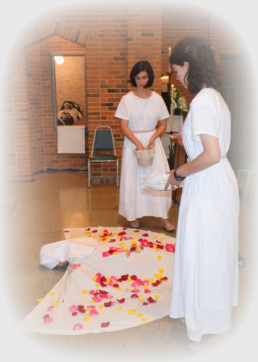
The Profession of Solemn Vows does not end the process of formation. Ongoing formation is necessary for the life of each Carmelite Nun and for her community as a whole. Opportunities for discussions, conferences and studies are encouraged throughout one’s life in order to deepen our awareness and commitment to our vocation and stimulate its growth. The contemplative is one who is ever open to the inspirations of grace and responds to the ever present need of renewal and transformation. “Love is never idle,” Our Holy Mother St. Teresa stresses. We must be continually walking along the way in order to arrive at our goal.

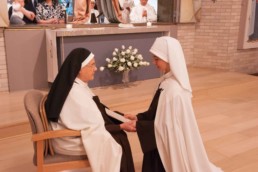
Solemn Profession
Solemn Profession
The Profession of Solemn Vows takes place in the presence of the Church. “It is a true wedding with Christ in a renewed covenant of love” (Constitutions #23). The years of formation leading up to this moment, should have prepared a Sister for this moment of grace and led her to freely offer herself to Christ and His Church through religious consecration for life.
“The Church, in Christ’s name, took possession one day of all your powers of living and loving. That was the day of your monastic Profession. Renew it often. And following the example of the saints, dedicate yourselves more and more, without seeking even to know how God uses your collaboration. You kindle in the world the fire of revealed truth and love…” (Pope St. John Paul II; Discourse to contemplatives in Lisieux, 2 June 1980).
The consecration of Solemn Profession of Vows is only the beginning of a life long quest for the perfection of charity and union with God, “for the glory of the Most Holy Trinity.”
The vow formula for the Solemn Profession of Discalced Carmelite Nun is as follows:
“I, Sister N., desiring to live faithfully with the Blessed Virgin Mary a life of allegiance to Jesus Christ, with my sisters as witnesses into your hands, Mother, vow to Almighty God forever, chastity, poverty and obedience, according to the Rule and Constitutions of the Discalced Nuns of the Order of the Blessed Virgin Mary of Mount Carmel. With my whole heart I give myself to this religious institute, restored by St. Teresa, to seek perfect charity in the service of our Mother the Church by the grace of the Holy Spirit and the help of the Mother of God, through constant prayer and evangelical self-denial, and to give eternal glory to the Most Holy Trinity.”
First Profession / Juniorate
First Profession / Juniorate
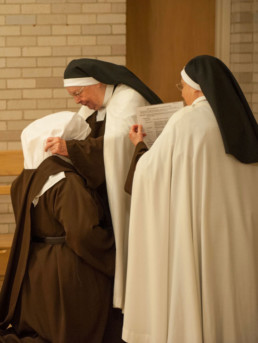
After the intense period of the Novitiate, the candidate may be accepted by the community to make their First Profession of Religious Vows. The vows of chastity, poverty and obedience according to Constitutions of the Discalced Carmelite Nuns are made in a private community ceremony. The period of the juniorate lasts for at least five years, before being admitted to the definitive commitment of Solemn Vows.
“The general purpose of temporary profession is to give time for the progressive development in the young professed of their capacity for self-formation, both as regards their spiritual life and personal study. The commitment of the simply professed to the evangelical counsels will grow deeper and stronger as it is lived out in the realism of daily life throughout these years” (Ratio Institutionis Monialium OCD #83). The Junior Professed Sister is to enter fully into the life of the community at this time and use these final years as a preparation for the definitive commitment of Solemn Vows.
Novitiate
Novitiate
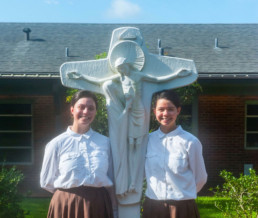
If the postulancy is for laying the foundation, the Novitiate is the beginning of the building process. It might be called “bootcamp” for the religious life. It’s required length of time is two years before being admitted to First Profession of Vows. Once accepted, a date would be set for the Clothing ceremony. We have retained the custom of the wearing of a bridal dress, where the bride-to-be is then clothed in the Holy Habit of Carmel during the Rite of Admission to Religious life, celebrated privately in community. The Prioress then gives the Novice her Religious Name and title, which expresses her particular spirit and mission in Carmel.
“The novitiate marks the beginning of the religious life, properly speaking. It allows the sister to enter into the Carmelite experience of a life lived in the desert in a small community of sisters. In this way, the authenticity of the vocation of the novice can be tested in daily life over a prolonged period, and her capacity to commit herself by the profession of the evangelical counsels to the consecration of her entire being to God… This is the time to lay deep foundations consisting of both living experience and spiritual teaching; it is also the time to weave existential bonds between the life and prayer of the novice and the saints of Carmel, so that each in their own way become, for her, models and companions along her journey” (Ratio Institutionis Monialium OCD #69). Prayer and self-knowledge, a teaching of the vows and the demands of Carmel, the Liturgy and Fraternal life in community will be stressed during this period. If there are genuine signs of a vocation and the positive fruits of growth, the novice may be admitted to First Profession of Religious Vows.
Postulancy
Postulancy
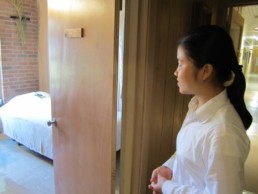
After the completion of the Aspirancy, the next stage of formation is the Postulancy. If the community accepts the candidate after sufficient discernment, an Entrance date is set. Leaving family and home, the candidate would enter and live permanently in the cloister. It is here where the day-to-day formation of the Postulant begins by immersing herself in the atmosphere of the Carmelite life of the community. Particular attention is to be paid to human formation and laying the foundation for formation in consecrated life. “Space is given for the postulant’s personal adaptation and integration into the community, and, above all, the maturity of her decision” (Ratio Institutionis Monialium OCD #64). Special attention is given at this stage of the journey for initiation into the Carmelite way of life, prayer and spiritual accompaniment. The postulancy typically lasts from one to one and a half years. After its completion, the candidate may be admitted to the novitiate after sufficient discernment and the community’s approval.
Aspirancy
Aspirancy
The first step in responding to the Lord’s call to becoming a Carmelite nun is to contact the community either by phone or email, or simply by stopping by and inquiring about our life. This initial contact would consist of getting to know the candidate, her background and family history, her vocation story, etc. If there are genuine signs of a vocation and good grounds for moving forward, the Aspirancy could begin. One year is required for this first stage of formation, but could be extended depending on circumstances.
During the Aspirancy, the young woman would begin having the first exposure to the life of the cloistered community by having times of “live-in” experience. The candidate would be guided in learning more about our Carmelite charism and vocation. Usually these first hand encounters with the community bring to light the genuineness of the call and the aptitude of the aspirant.
Formation
Stages of Formation
Formation takes on different stages as time progresses, deepening one’s commitment to the vocation of Carmel. Read more about each and their significance.
Aspirancy
Postulancy
Novitiate
First Profession / Juniorate
Solemn Profession
Ongoing Formation
What is Formation?
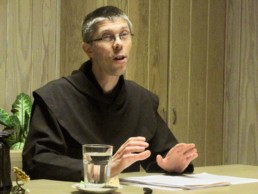
“Since the very purpose of consecrated life is conformity to the Lord Jesus in his total self-giving, this must also be the principal objective of formation. Formation is a path of gradual identification with the attitude of Christ towards the Father” (Vita Consecrata #65).
Seeking the Face of God in prayer and in the atmosphere of the cloister lies at the heart of the wholly contemplative vocation. It is a radical response to the gift of love granted to those whom the Father has called and chosen for this special mission. Since this particular following of Christ is a life-long journey that requires a response of the entirety of the person, time is needed for assimilation and a genuine discernment on the part of the candidate and the community. For this reason, the initial stages of formation–from Aspirancy to the definitive commitment of Solemn Vows–spans a period of 9 to 12 years.
“Religious formation is at the service of the person and the grace of her vocation throughout her life…. While it is true that this formation, particularly at the beginning, involves a certain amount of doctrinal and spiritual instruction, it consists above all in introducing a person into the living reality of Carmel. This was the way that the Lord acted with his disciples when he invited them to come and see, and to experience what he himself was living” (Ratio Institutionis Monialium OCD #23).